Knife Skills 101: The Only Cuts You Need at Home (Safe, Fast Prep)
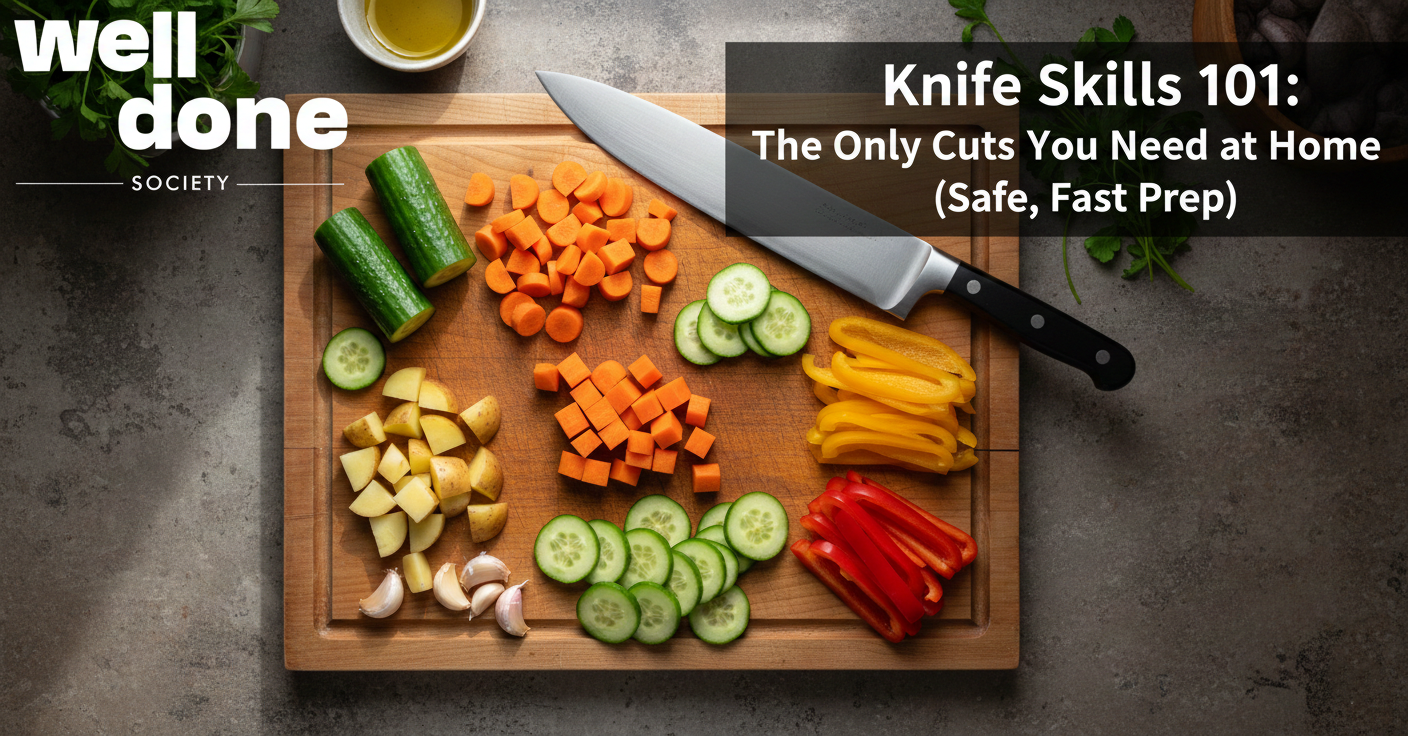
What You Need
1) One good knife
-
Chef’s knife (20 cm / 8 inch) is the most versatile.
-
If you prefer smaller: a Santoku is a great alternative.
2) A stable cutting board
-
Wood or quality plastic is ideal.
-
Put a damp paper towel or kitchen cloth under the board so it doesn’t slide.
3) A safe grip (this matters more than speed)
-
Pinch grip: pinch the blade near the handle with your thumb and index finger; wrap the other fingers around the handle.
-
Claw hand: curl fingertips of your non-knife hand inward and use your knuckles as a guide.
The 5 Cuts Every Home Cook Should Know
1) Slice (for cucumbers, tomatoes, citrus, onions)
What it’s for: quick salads, sandwiches, garnishHow to do it:
-
Create a flat surface (cut one side so it doesn’t roll).
-
Use a smooth forward motion—don’t press straight down.
-
Keep thickness consistent.
Pro tip: For tomatoes, use a sharper knife and light pressure. If it squashes, it’s usually the knife—not you.
2) Rough Chop (for herbs, greens, quick stir-fries)
What it’s for: speed when perfect shape doesn’t matterHow to do it:
-
Gather ingredients into a pile.
-
Rock the knife tip on the board while lifting and lowering the handle.
-
Turn the pile and repeat until the size is right.
Pro tip: Don’t over-chop herbs or they can turn watery and dark.
3) Dice (small, medium, large — for onions, peppers, potatoes)
What it’s for: even cooking and cleaner presentationHow to do it (simple home method):
-
Slice the ingredient into even planks.
-
Stack planks and slice into sticks.
-
Turn and slice across the sticks to make cubes.
Sizes (easy reference):
-
Small dice: ~5 mm (fast-cooking sauces, salsas)
-
Medium dice: ~1 cm (stews, sauté)
-
Large dice: ~2 cm (roasting)
4) Mince (for garlic, ginger, chili)
What it’s for: flavor that spreads evenlyHow to do it:
-
Smash garlic with the flat of the knife to remove the peel.
-
Slice, then chop.
-
Hold the knife tip down and rock to mince finer.
Pro tip: Add a tiny pinch of salt to garlic while mincing—helps it break down faster.
5) Julienne (matchsticks) → the “fancy” cut that’s actually useful
What it’s for: salads, slaws, quick stir-fries (carrot, cucumber, bell pepper)How to do it:
-
Square off the ingredient (create flat sides).
-
Cut into thin planks.
-
Stack planks and slice into thin matchsticks.
Pro tip: If perfect matchsticks feel hard, aim for “thin sticks.” Consistency matters more than perfection.
Practice Routine (10 Minutes, No Stress)
Pick one ingredient and do one cut:
-
Cucumber: slice → dice
-
Carrot: julienne → small dice
-
Onion: medium dice
-
Garlic: mince
Do this once a week for a month and your hands will learn faster than you think.
Common Mistakes (and Quick Fixes)
-
Board slipping: damp towel under board.
-
Food rolling: cut a flat side first.
-
Uneven sizes: slow down and stack planks before dicing.
-
Knife feels “hard to use”: it’s often dull. A sharp knife is safer than a blunt one.
-
Fingertips at risk: keep the claw hand tight; let knuckles guide the blade.
Knife Care Basics (So Cutting Gets Easier)
-
Wash and dry right after use.
-
Avoid cutting on glass/stone boards.
-
If you can, sharpen occasionally (or use a service). A honing rod helps alignment but isn’t the same as sharpening.
Quick FAQ
Do I need a full knife set?No. One chef’s knife + a small paring knife covers most home cooking.Should I “rock chop” everything?Not everything. Rocking is great for herbs; for many vegetables, a smooth slice-and-forward motion is cleaner and safer.
Want to Learn This in a Workshop?
At Welldone Society, a Knife Skills session can cover:
-
Safe grip and speed-building
-
Onion dice without tears
-
Herbs and garlic techniques
-
Prep like a pro for salads and meal prep